
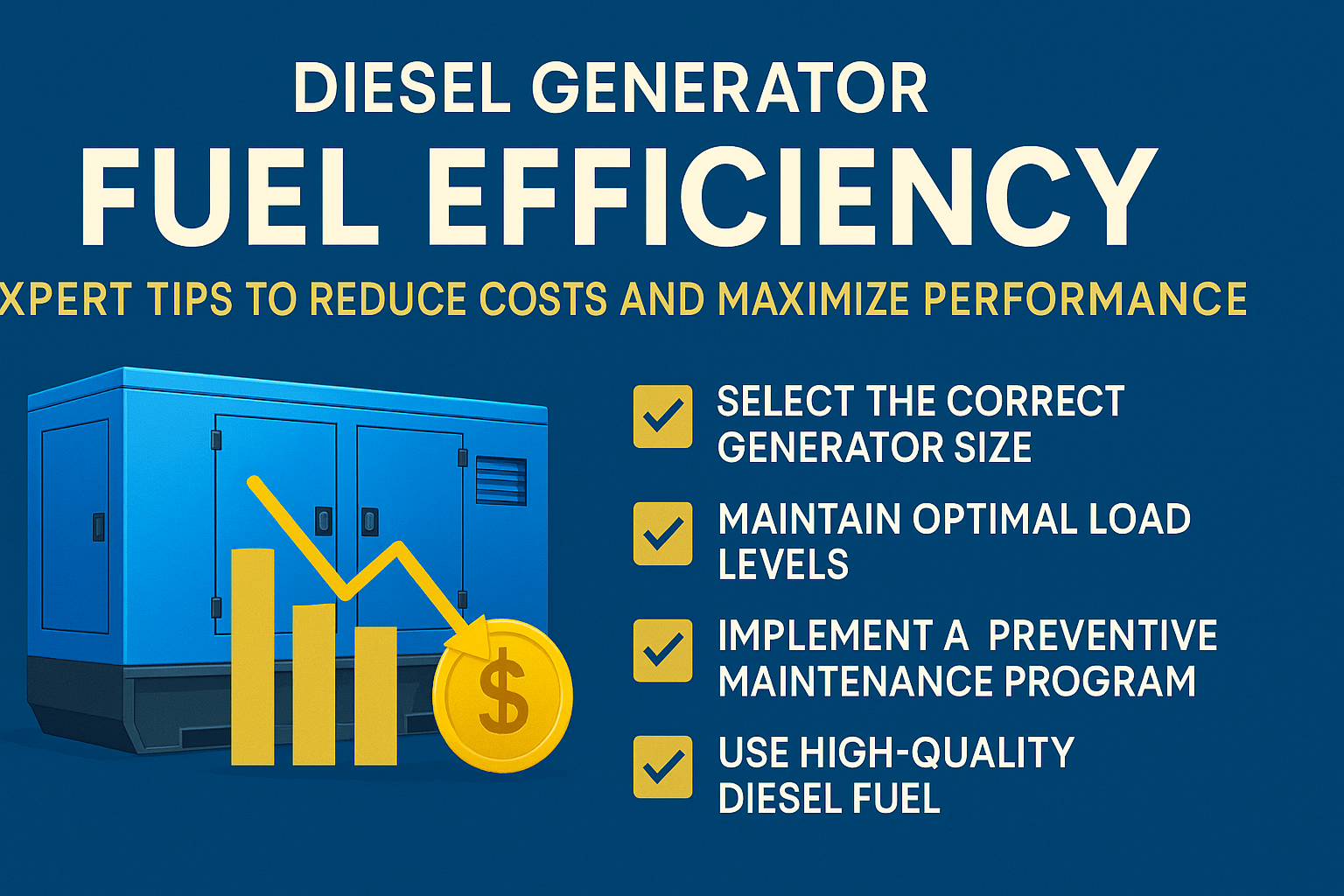
Diesel Generator Fuel Efficiency: Expert Tips to Reduce Costs and Maximize Performance
Diesel generators are essential for ensuring uninterrupted power supply in industries, construction, remote areas, and emergency backup systems. However, fuel expenses can be a major operating cost. Improving the fuel efficiency of your generator not only reduces these expenses but also enhances equipment longevity and lowers emissions. This guide outlines key techniques to optimize fuel usage and operational performance.
🔧 1. Select the Correct Generator Size
Right-sizing your generator is the foundation of fuel efficiency. An oversized generator running at low loads consumes more fuel per kilowatt-hour, while an undersized unit may operate inefficiently and wear out faster.
💡 Tip: Conduct a thorough load analysis before purchasing to match generator output with your average and peak power demands.
⚖️ 2. Maintain Optimal Load Levels
Diesel engines operate most efficiently at 70–80% of their rated load. Running consistently at low loads leads to incomplete combustion, carbon buildup, and increased fuel consumption.
💡 Solution: Use load management systems or parallel multiple smaller generators to balance varying power requirements.
🛠️ 3. Implement a Preventive Maintenance Program
Regular maintenance is critical to efficiency:
-
Replace clogged air and fuel filters
-
Clean injectors and exhaust systems
-
Check and maintain lubrication and coolant levels
Neglected components can reduce combustion efficiency and increase diesel usage.
💡 Pro Tip: Use OEM parts and follow the manufacturer's service intervals.
⛽ 4. Use High-Quality Diesel Fuel
Low-grade fuel with water or impurities can damage injectors and lead to poor combustion.
💡 Tip: Use certified fuel suppliers, install fuel/water separators, and store fuel in clean, sealed tanks.
💡 5. Upgrade to Electronic Fuel Injection (EFI)
Modern EFI systems adjust fuel delivery based on real-time engine needs, ensuring precise combustion and better fuel economy than traditional mechanical injection.
💡 ROI: Though upgrading may involve upfront cost, the long-term savings on fuel can justify the investment—especially for frequently used generators.
📶 6. Install Smart Controls and Monitoring Systems
Advanced control panels and remote monitoring tools help track:
-
Fuel consumption trends
-
Load usage patterns
-
Maintenance alerts
With real-time data, you can fine-tune operations for better efficiency.
💡 Example: Some systems can automatically shut down or throttle generators during low-load conditions to prevent unnecessary fuel waste.
🕒 7. Avoid Unnecessary Idling
Letting a generator idle without significant load leads to incomplete combustion and fuel waste.
💡 Best Practice: Shut down the generator if it won’t be used for more than a few minutes, or use automatic idle control features.
🌬️ 8. Ensure Proper Ventilation and Cooling
Overheating due to poor ventilation reduces engine efficiency and increases fuel use.
💡 Tip: Keep generator enclosures well-ventilated and clean, and routinely inspect radiators and fans for blockages.
✅ Conclusion: Small Changes, Big Savings
Improving diesel generator fuel efficiency doesn't require massive capital investment. By applying smart operation strategies, timely maintenance, and modern technologies, businesses can significantly reduce fuel consumption while maximizing output and reliability.
In a world where energy efficiency equals profitability, optimizing your generator is a powerful step toward sustainable operations.