
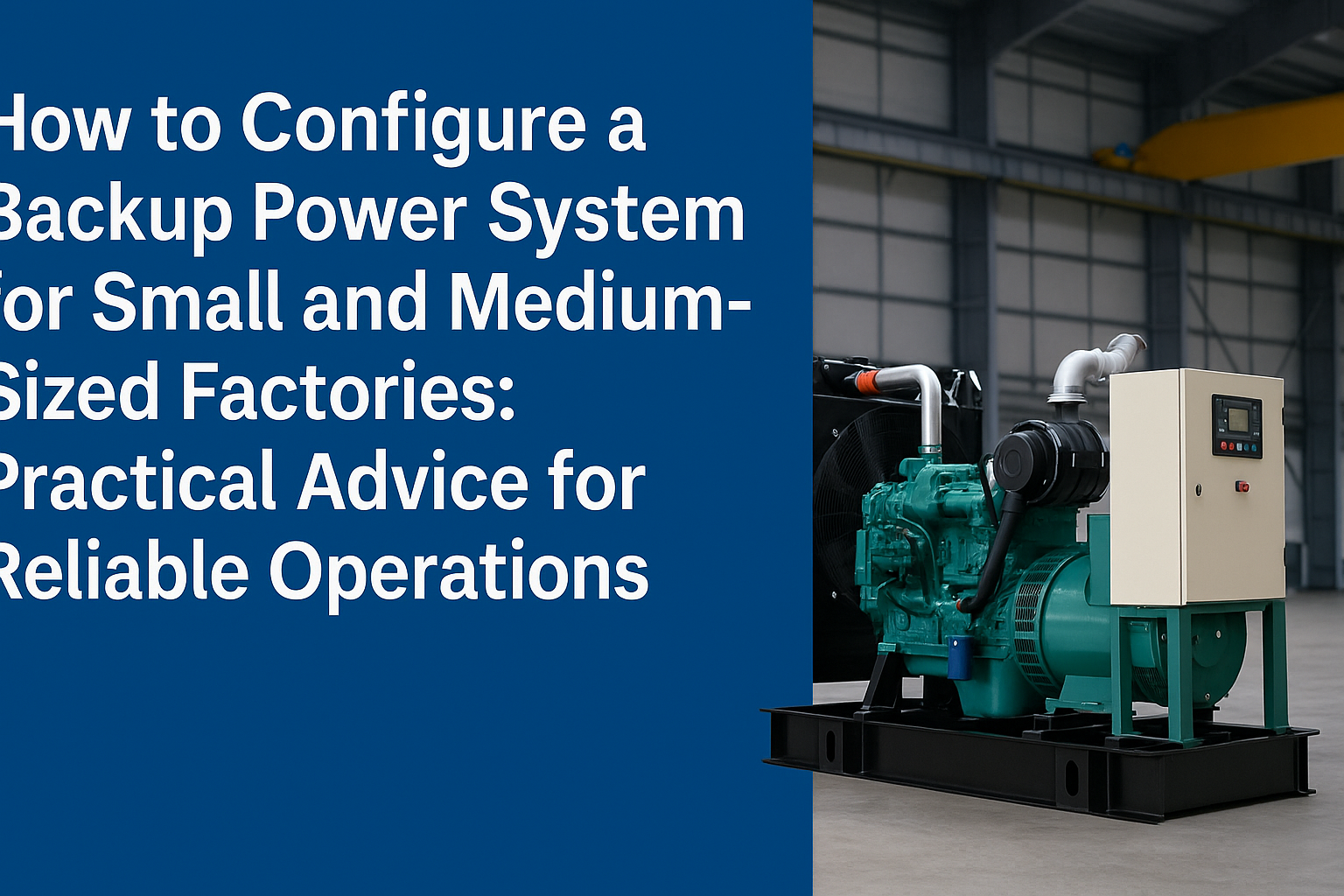
How to Configure a Backup Power System for Small and Medium-Sized Factories: Practical Advice for Reliable Operations
In today’s manufacturing landscape, uninterrupted power supply is essential—even more so for small and medium-sized factories (SMEs) that operate on tight production schedules and limited budgets. A single blackout can mean halted operations, missed orders, equipment damage, or worse—lost clients.
This guide explains how SME manufacturers can configure a practical, affordable, and scalable diesel backup power solution to avoid these risks.
✅ Why Do SMEs Need Backup Power?
While large factories may have extensive backup systems, small and medium factories are often more vulnerable to:
-
Grid instability or unreliability
-
Extreme weather events
-
Planned or emergency maintenance
Without a power continuity plan, these disruptions can lead to:
-
Production downtime
-
Material spoilage or loss
-
Missed delivery deadlines
-
Increased operational costs
A diesel generator-based backup system offers a cost-effective and reliable solution for most SME use cases.
⚙️ Step 1: Assessing Power Requirements
Begin by calculating your critical load—the minimum amount of power needed to keep essential systems running during an outage. These may include:
-
Production line machines
-
Compressors or motors
-
Lighting in critical areas
-
Control systems or IT servers
Tip: Always add a 15–20% margin above your estimated load to allow for future growth or starting surges.
🔋 Step 2: Selecting the Right Diesel Generator
When selecting a generator for SME backup use, consider the following:
| Factor | Recommendation |
|---|---|
| Power Rating | Choose a generator with output 20% above your peak load. |
| Type | Silent type for indoor/urban use; open type for outdoor/factory zones. |
| Fuel Efficiency | Prioritize models with optimized consumption under partial load. |
| Voltage/Phase | Match your plant’s electrical requirements (single or three-phase). |
| Brand & Support | Opt for reliable brands with accessible after-sales service. |
🔌 Step 3: Configuring the System Components
A complete SME backup system includes more than just the generator:
-
Automatic Transfer Switch (ATS): Detects power loss and switches to generator power instantly.
-
Manual Transfer Switch (MTS): Cost-effective alternative if auto-switching is not essential.
-
Fuel Tank: Aim for 8–12 hours of runtime per refill.
-
Control Panel: Enables remote monitoring, diagnostics, and alarms.
🛠️ Step 4: Installation Considerations
Proper installation ensures safety, efficiency, and compliance:
-
Location: Install in a ventilated area, protected from water, dust, and heat sources.
-
Noise Reduction: Use acoustic canopies or position the generator away from office zones.
-
Grounding and Wiring: Must comply with local electrical codes.
-
Accessibility: Keep room for fuel refilling and maintenance access.
💡 Step 5: Load Prioritization Strategy
You don’t need to power the entire facility—just the essentials. Use a tiered load approach:
-
Tier 1 (Must-Have): Production lines, critical lighting, control panels.
-
Tier 2 (Nice-to-Have): Office lighting, fans, air compressors.
-
Tier 3 (Non-Essential): Breakroom appliances, exterior lights, admin printers.
Install breakers or sub-panels for segmented control.
🧾 Step 6: Budget and ROI Planning
Backup systems are an investment, but losses from a single 2–3 hour outage can often exceed the system’s cost over time. Typical SME backup cost breakdown:
| Item | Estimated Cost Range (USD) |
|---|---|
| 50–100 kVA Diesel Generator | $5,000 – $12,000 |
| ATS / Control Panel | $500 – $2,000 |
| Installation & Accessories | $1,000 – $3,500 |
| Maintenance (Annual) | $300 – $800 |
Expected ROI: 6–18 months depending on power outage frequency and production loss prevention.
🔄 Step 7: Maintenance & Fuel Optimization Tips
To keep your system cost-effective and ready:
-
Avoid long idle time: Run the generator monthly to ensure readiness.
-
Load balancing: Avoid running the generator below 30% load to prevent engine wear.
-
Routine checks: Monitor fuel quality, oil levels, and filter status.
-
Service schedule: Follow OEM-recommended intervals for oil changes and part replacements.
🔚 Conclusion
A backup power system is not a luxury—it’s a strategic necessity for small and medium-sized factories operating in today’s volatile energy environment. With the right generator, sizing strategy, and installation plan, you can protect your production line, safeguard equipment, and maintain customer trust even when the grid goes dark.
Whether you're building your first power backup solution or upgrading an old one, diesel generator systems offer a practical, scalable, and cost-effective option for business continuity.
Author: International Sales Department – [Ningde City Lion Motor Co., Ltd.]
Last updated: July 29, 2025